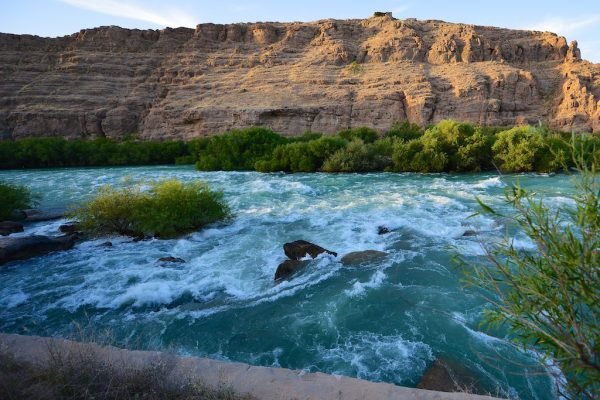
Deadly clashes broke out between Iran and Afghanistan in the last week of May 2023, escalating into conflicts at the border. Following the violence, Iran closed the important commercial border of Melag Saransh. The root cause of the conflict between both countries lies in the dispute over the Helmand River, a vital water body that spans across the border.
The Helmand River is Afghanistan’s longest river, flowing through the country for over a thousand kilometers and serving as a critical resource for the livelihoods of inhabitants in the southwestern provinces. Afghanistan has constructed a dam on its side of the river to generate electricity and facilitate the irrigation of agricultural land. The Helmand River has been a subject of contention between Iran and Afghanistan since the 1870s due to issues such as droughts, improper water allocation, and climate change affecting both nations
Historical attempts to resolve the Helmand River dispute have been made.
In 1939, an accord was signed between the kings of Iran and Afghanistan to share the water. However, Afghanistan later reversed its decision, hindering the resolution of the conflict. In 1948, a three-person committee called the Helmand River Delta Commission was established based on recommendations from the United States. The commission’s report in 1951 suggested that Iran should receive 22 cubic meters of water per second, but Iran rejected it, demanding a larger share.
After numerous renegotiations, a treaty was signed between the prime ministers of Iran and Afghanistan in 1969. According to this agreement, Iran would receive 22 cubic meters of water per second, with the option to purchase an additional four cubic meters. In return, Iran agreed to grant Afghanistan access to ports Banda Abbas and Chabahar without preconditions. However, political crises in both countries prevented the treaty from being officially signed or fully implemented.
Tensions persisted over the years as Iran accused Afghanistan of not adhering to the 1973 treaty. Afghanistan’s construction of dams on the Helmand River further strained the relationship. Afghanistan aimed to enhance agricultural output through the construction of irrigation lands, while Iran faced its own drought-related challenges.
The situation worsened with the completion of the Kamal Khan Dam in 2021, as Iran raised environmental concerns while Afghanistan argued that the dam was in line with the 1973 treaty. The recent border clashes on May 28, 2023, added to the tensions surrounding the Helmand River dispute, though the specific triggers for the attacks remain unclear.
Both Iran and Afghanistan need to engage in sincere dialogue to achieve a lasting resolution. The Helmand River is vital for Afghanistan’s southwestern provinces, while Iran faces its own water crisis. International mediation, cooperation, and sharing of best practices in water management could facilitate discussions and help address the underlying issues. Comprehensive water-sharing agreements, backed by effective monitoring and conflict resolution mechanisms, should be developed to ensure the sustainable use of the Helmand River’s resources.
A regional approach involving neighboring countries like Pakistan and Turkmenistan, also impacted by the Helmand River’s water flow, could contribute to a holistic solution. Collaboration on water management, climate change adaptation, and transboundary water-sharing agreements can foster stability and prosperity in the region.
Diplomacy, peaceful negotiations, and restraint are crucial in resolving the dispute. The human cost of border clashes should not be underestimated. The current situation calls for a genuine commitment to finding a sustainable resolution that addresses the water needs of both Iran and Afghanistan, fosters regional stability, and ensures a prosperous future for the people living along the Helmand River
