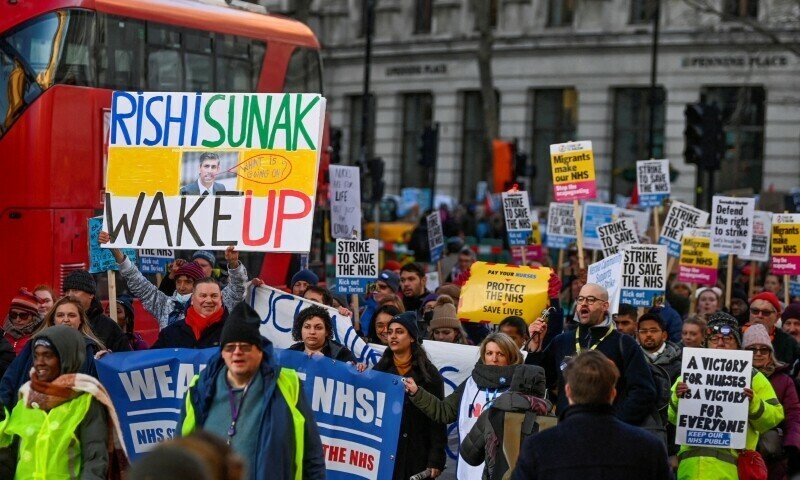
Britain faces largest ever healthcare strikes. Tens of thousands of nurses and ambulance drivers to walk out on Monday as Britain faces the largest-ever health workers’ strike over a growing pay dispute with the government, further disrupting an already troubled healthcare system.
Since late last year, nurses and ambulance workers have been striking individually on and off. However, Monday’s walkout will primarily take place in England and will be the largest in the National Health Service’s 75-year history (NHS).
Stephen Powis, the top physician in England, predicted that this week’s strike action, which would also see physiotherapists walk out on Thursday, will most likely be the most disruptive.
Health workers are demanding a pay rise that reflects the worst inflation in Britain in four decades, while the government says that would be unaffordable and cause more price rises, and in turn, make interest rates and mortgage payments go up further.
Since last summer, some 500,000 employees, many of them in the public sector, have participated in strikes, increasing the pressure on Prime Minister Rishi Sunak to settle the disputes and minimise disruptions to essential services like trains and schools.
When asked by Sky News if the strikes would endanger lives, Business Minister Grant Shapps responded that he was “concerned that it does” due to a lack of cooperation between the striking workers and the backup services, such as the army.
“The Royal College of Nursing (RCN) have very responsibly […] told the NHS this is where we are going to be striking and they’re able to put the emergency cover in place. Unfortunately, we’ve been seeing a situation with the ambulance unions where they refuse to provide that information,” he said.
“This government is putting lives at risk,” she said.
The NHS, historically a source of pride for most Britons, is under extreme pressure with millions of patients on waiting lists for operations and thousands each month failing to receive prompt emergency care.
The RCN says a decade of poor pay has contributed to tens of thousands of nurses leaving the profession 25,000 over just the last year with the severe staffing shortages impacting patient care.
The RCN initially asked for a pay rise of five per cent above inflation and has since said it could meet the government “halfway”, but both sides have failed to reach an agreement despite weeks of talks.
Thousands more ambulance workers who are members of the GMB and Unite trade unions are also planning a walkout on Monday over a salary issue. The two unions have each scheduled further days of strike action.
Not all ambulance workers will strike at once and emergency calls will be attended to. As they consider salary offers from the Welsh government, nurses and certain ambulance personnel in Wales have cancelled strikes scheduled for Monday.
PM Sunak said in a TalkTV interview last week he would “love to give the nurses a massive pay rise” but said the government faced tough choices and it was funding the NHS in other areas such as by providing medical equipment and ambulances.
