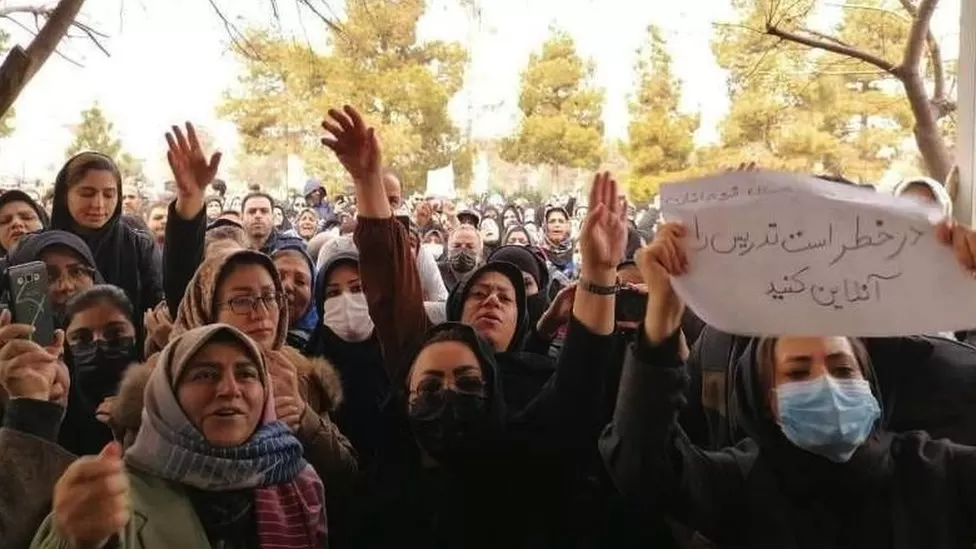
Nearly 700 schoolgirls have been poisoned by toxic gas in Iran since November, in what many actually think is a deliberate plan to force their schools to close.
Although no schoolgirls have died, dozens have experienced respiratory issues, nausea, dizziness, and fatigue.
“It became evident that some people wanted all schools, especially girls’ schools, to be closed down,” the deputy health minister said on Sunday.
However, he later stated that his remarks were misconstrued.
Last week, the prosecutor general announced the launch of a criminal investigation. However, he said that the available information only indicated “the possibility of criminal and premeditated acts”. Meanwhile, public dissatisfaction is growing.
On November 30, 18 students from the Nour Technical School in the religious city of Qom were poisoned and taken to the hospital. Since then, more than ten girls’ schools in the surrounding province have been targeted.
At least 194 girls are said to have been poisoned in the last week at four schools in the western province of Lorestan’s Borujerd. On Tuesday, 37 more students were poisoned at the Khayyam Girls’ School.
Before becoming ill, the schoolgirls poisoned in Iran reported smelling tangerine or rotten fish. At least 100 people protested outside the governor’s office in Qom earlier this month.
“You are obliged to ensure my children’s safety! I have two daughters,” one father shouted in a video widely shared on social media. “Two daughters… and all I can do is not let them go to school.”
“This is a war!” declared a woman. “They are doing this in a girls’ high school in Qom to force us to sit at home. They want girls to stay at home.”
Some parents claim their children were sick for weeks following the poisoning. Another hospital video shows a teenage girl lying dazed on a bed, her mother beside her.
“Dear mothers, I’m a mother and my child is in a hospital bed and her limbs are weak,” says the distraught mother. “I pinch her but she doesn’t feel anything. Please don’t send your children to school.”
At a news conference on Sunday, Deputy Health Minister Younes Panahi said the girls had been poisoned by chemicals that “are not military grade and are publicly available”.
His subsequent denial indicated disagreements among officials about how to deal with public outrage when no suspects have been identified.
The poisonings have been concentrated in Qom, a city that is home to important Shia Muslim shrines as well as the religious leadership that serves as the Islamic Republic’s backbone.
Since September, the clerical establishment has been confronted by the mass protests that arose after the death in custody of a young Kurdish woman, Mahsa Amini, who was detained by morality police for allegedly failing to wear her headscarf “properly”.
Some Iranians believe the schoolgirls are being poisoned as “retaliation” for their role in the unrest. Videos of schoolgirls tearing off their headscarves and chanting anti-establishment slogans flooded social media.
