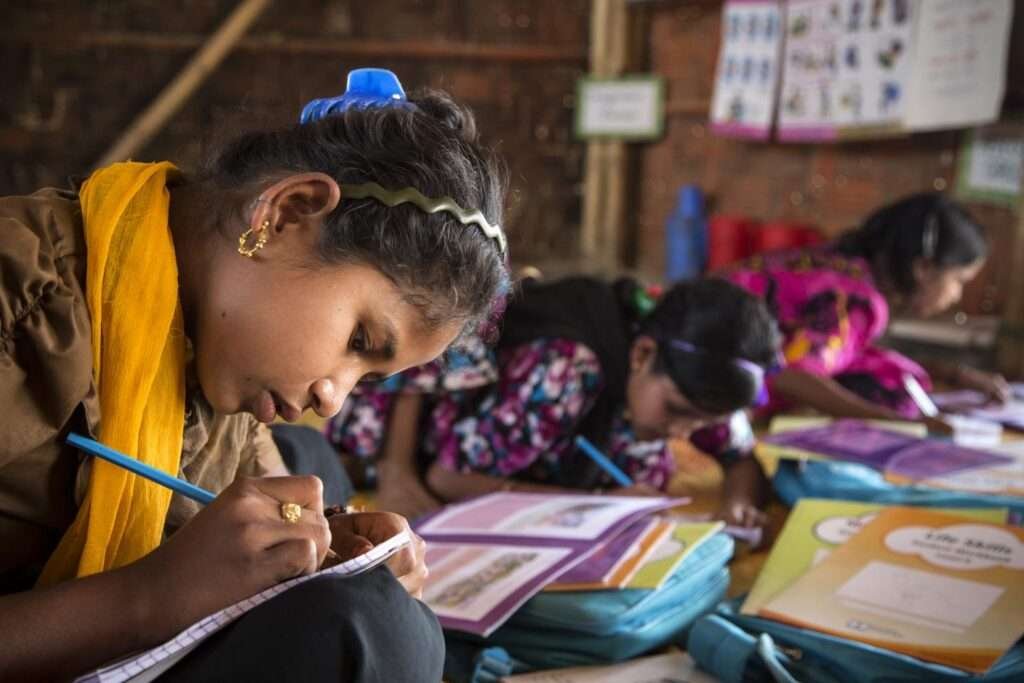
Girls’ education in Pakistan has always been a controversial topic, with many religious leaders and clerics opposing it on the grounds that it goes against the teachings of Islam. However, over the past few decades, there has been a shift in attitudes toward education for girls, with more and more people recognizing the importance of education for the overall development of society.
Girls’ education in Muslim countries such as Pakistan has long been a topic of debate and controversy. While many argue that education is a fundamental human right and that girls should have equal access to education, others claim that education is not a priority for girls in these countries and that they should focus on domestic and family responsibilities instead. This essay aims to explore the various factors that contribute to the low levels of girls’ education in Muslim countries and the efforts being made to improve the situation.
One of the main factors that contribute to the low levels of girls’ education in Pakistan is cultural and religious beliefs. In the country, traditional gender roles dictate that girls should focus on domestic and family responsibilities, while boys are encouraged to pursue education and career opportunities. This belief is often rooted in interpretations of Islamic texts and teachings, which place a greater emphasis on the role of women as caretakers and homemakers. This belief is also often reinforced by societal expectations and cultural norms, which prioritize boys’ education over girls’ education.
Another factor that contributes to the low levels of girls’ education in Muslim countries is poverty. Many families in these countries live in poverty and cannot afford to send their daughters to school. In some cases, families may choose to prioritize the education of their sons over their daughters, as they believe that boys will have better job prospects and be able to provide for the family in the future. Additionally, poverty can also limit girls’ access to education by making it difficult for them to afford uniforms, school supplies, and transportation to school.
A lack of access to education is also a major factor that contributes to the low levels of girls’ education in Muslim countries. In many cases, schools may be located too far from girls’ homes or there may not be enough schools in certain areas to meet the demand. This lack of access can be particularly pronounced in rural areas, where there may be fewer schools and limited transportation options. Additionally, some schools may not have the resources or infrastructure to accommodate girls, making it difficult for them to attend school.
One of the many reasons that girls’ education has been opposed in Pakistan is the belief that it goes against the teachings of Islam. Many religious leaders argue that Islam does not allow for women to be educated and that their primary role is to stay at home and take care of the family. This belief is based on a narrow interpretation of certain verses in the Quran, which are often taken out of context and used to justify the oppression of women.
However, this view is not supported by the majority of scholars and experts on Islam, who argue that the Quran and Hadith (sayings and actions of the Prophet Muhammad ﷺ) actually encourage education for both men and women. In fact, the Prophet Muhammad ﷺ himself is reported to have said that seeking knowledge is a duty for every Muslim, regardless of gender.
Despite this, many clerics in the country continue to oppose girls’ education, using their influence and authority to sway public opinion against it. They often use their pulpits to spread misinformation and fear the consequences of educating girls, claiming that it will lead to the breakdown of traditional values and the loss of respect for authority.
This opposition to girls’ education has had serious consequences in Pakistan, where the literacy rate for women is one of the lowest in the world. According to the World Bank, only about half of Pakistani women are literate, compared to over three-quarters of men. This has led to a significant gender gap in education, with many girls missing out on the opportunity to learn and develop their skills.
The consequences of this lack of education are far-reaching and have a negative impact on the entire society. Educated girls are more likely to marry later, have fewer children, and be more involved in their communities. They are also more likely to have better health outcomes and be more financially independent. This is why it is so important that girls in Pakistan are given the opportunity to go to school and receive an education.
In recent years, there has been a growing recognition of the importance of girls’ education in Pakistan, with a number of initiatives being launched to promote it. One of the most significant of these is the Malala Fund, which was founded by Nobel Peace Prize laureate Malala Yousafzai to support girls’ education in Pakistan and around the world.
The Malala Fund has been instrumental in raising awareness about the importance of girls’ education in Pakistan and has helped to provide financial support to girls who want to go to school but cannot afford to do so. The fund has also supported a number of education initiatives in Pakistan, including the construction of new schools and the provision of educational materials and resources.
Despite these efforts, there are still many challenges facing girls’ education in Pakistan. One of the biggest challenges is the lack of access to education for many girls, particularly in rural and remote areas. Many girls in these areas have to travel long distances to go to school, which can be a major barrier to their education.
In addition, there is often a lack of schools in these areas, with many girls having to attend overcrowded and underfunded schools. There is also a lack of trained teachers, with many schools having to give a teacher classes to attend than their capacity and competency.
The issue of safety and security is also a major factor that affects girls’ education in Muslim countries. In some cases, girls may face violence or harassment when traveling to or from school, or while at school/ college or university. This can make it difficult for them to attend school regularly or to focus on their studies. In some cases, girls may also be at risk of early marriage or female genital mutilation, which can prevent them from attending school.
Despite these challenges, there are a number of efforts being made to improve girls’ education in Muslim countries. One approach is to focus on improving access to education. This can involve building more schools in rural areas, providing transportation to and from school, and improving the infrastructure of existing schools to make them more accessible for girls. Additionally, programs that provide scholarships or other financial support can help girls afford the costs of education.
Another approach is to address cultural and religious beliefs that may be hindering girls’ education. This can involve working with religious leaders and community members to promote the importance of education for girls and to challenge traditional gender roles that prioritize boys’ education over girls’ education. Additionally, providing education and training for girls can help to empower them and give them the skills and knowledge they need to advocate for their own education and rights.
In addition to these efforts, there are also a number of organizations and initiatives working to improve girls’ education in Muslim countries. For example, the United Nations Girls’ Education Initiative (UNGEI) is a global effort to promote girls’ education and gender equality in education. UNGEI works with governments, civil society organizations, and other partners to improve access to education and toy on untrained teachers to teach their students. All of these factors contribute to the low enrollment rates of girls in schools in Pakistan.
