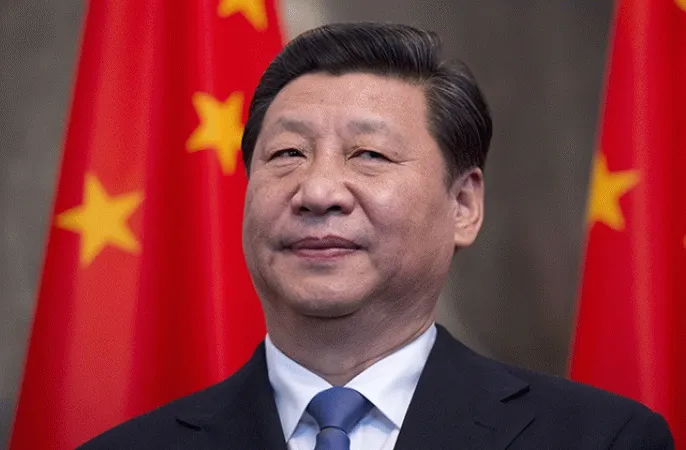
Over the years, various reports and unverified claims have circulated alleging that Chinese President Xi Jinping faced multiple assassination attempts during his rise to power.
Some accounts claim that six assassination attempts were made against him at different locations during official visits. These assertions, however, have not been independently confirmed by Chinese authorities.
According to these reports, investigations into the alleged incidents reportedly linked them to internal power struggles within the Chinese Communist Party (CCP) rather than external threats.
The claims suggest that rival factions within the party were responsible, allegedly hiring individuals to carry out attacks.
Security Alerts and Internal Party Tensions
Some reports further claim that four out of 16 internal security alerts issued by China’s security apparatus were related to Xi Jinping’s movements within Beijing, including visits to municipal government buildings. These accounts point to heightened security concerns during sensitive political periods.
It is important to note that China does not publicly disclose detailed information regarding internal security threats to senior leadership, making independent verification difficult.
Restructuring of the Central Security Bureau
In March 2015, a significant reshuffle reportedly took place within the Central Security Bureau (CSB)—the elite organization responsible for the personal security of top Chinese leaders and the protection of Zhongnanhai, the leadership compound in Beijing.
Individuals removed during this restructuring were reportedly appointed during the tenure of Ling Jihua, then Director of the CCP General Office. Ling later came under investigation for “serious violations of party discipline,” according to an announcement by the Central Commission for Discipline Inspection (CCDI) on December 31, 2014.
Some commentators have described Ling as a political rival of Xi Jinping, although official statements did not link him to any alleged assassination plot.
High-Profile Political Figures Implicated in Power Struggles
Several prominent former officials were later purged in Xi Jinping’s sweeping anti-corruption campaign, including:
-
Bo Xilai, former Chongqing party secretary
-
Zhou Yongkang, former Politburo Standing Committee member
-
Xu Caihou, former vice chairman of the Central Military Commission
Analysts have often described these cases as part of broader elite power struggles within the CCP, though Chinese authorities framed them strictly as corruption and discipline cases.
Sentencing of Senior Security Officials
Former Deputy Minister of Public Security Sun Lijun was recently handed a suspended death sentence by a Chinese court. According to state broadcaster China Central Television (CCTV), the ruling does not allow parole.
Sun was convicted of accepting bribes worth 646 million yuan ($91 million), stock manipulation, and illegal possession of firearms. While the court verdict did not mention assassination-related activities, China’s top disciplinary body accused him of “cultivating personal power and forming an interest group.”
Other officials, including Fu Zhenghua and Wang Like, also received death sentences with reprieve, while several former police chiefs were handed lengthy prison terms.
Rumors and Speculation About Xi Jinping’s Political Standing
Amid these developments, rumors and speculation have occasionally surfaced suggesting shifts in Xi Jinping’s control over the People’s Liberation Army (PLA). These claims intensified after Xi reportedly left the Shanghai Cooperation Organisation (SCO) Summit in 2022 early, without holding scheduled bilateral engagements.
Chinese authorities have not confirmed any such claims, and no official statement has suggested a reduction in Xi’s authority over the military.
Context: CCP Power Structure Since 1949
Since taking power in 1949, the CCP has faced repeated internal challenges, factional rivalries, and ideological shifts. Observers note that the party’s centralized structure can amplify internal conflicts, particularly during leadership transitions.
However, due to strict media controls and limited transparency, many claims regarding internal plots and assassination attempts remain speculative and unverified.
