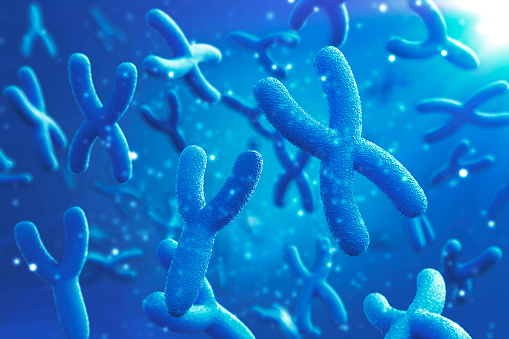
Why are men slowly losing their Y chromosome? The impending extinction of the Y chromosome, essential for male development in humans, has stirred significant scientific interest and speculation regarding the trajectory of human evolution, according to a report by Metro.
Despite its pivotal role in initiating male characteristics, the Y chromosome possesses a mere fraction of the genes found on the X chromosome, with only around 55 compared to the X chromosome’s 900. Scientists have observed a troubling trend in its diminishing size.
Why are men slowly losing their Y chromosome?
Professor Jenny Graves has drawn parallels between this phenomenon and the evolutionary history of the platypus, highlighting the gradual loss of active genes on the Y chromosome over a span of 166 million years, at a rate of approximately five genes per million years.
If this trend persists, experts speculate that the Y chromosome could disappear entirely within the next 11 million years.
Although not an immediate crisis, the longevity of the Y chromosome remains a subject of debate, with estimates ranging from a few thousand years to an indefinite future.
Recent studies on rodent species have provided insights into potential solutions for sex determination in the absence of the Y chromosome.
For instance, mole voles in Eastern Europe and spiny rats in Japan have adapted with alternative sex-determining genes, showcasing the capacity for species to evolve alternative mechanisms.
Within the realm of human evolution, the prospect of developing a new sex-determining gene evokes both excitement and concern among researchers.
Also read: New dinosaur species discovered on the Isle of Wight
Professor Graves has raised questions about the potential risks associated with such evolutionary shifts, including the emergence of disparate sex-determination systems that could lead to speciation within the human species.
This speculation has sparked broader considerations about the future landscape of human evolution, acknowledging the uncertainties and possibilities that lie ahead, particularly in light of the interconnected nature of global populations.
The evolving role of the Y chromosome prompts reflection on the trajectory of human genetics and presents an intriguing prospect for the future of sex determination in our species.
